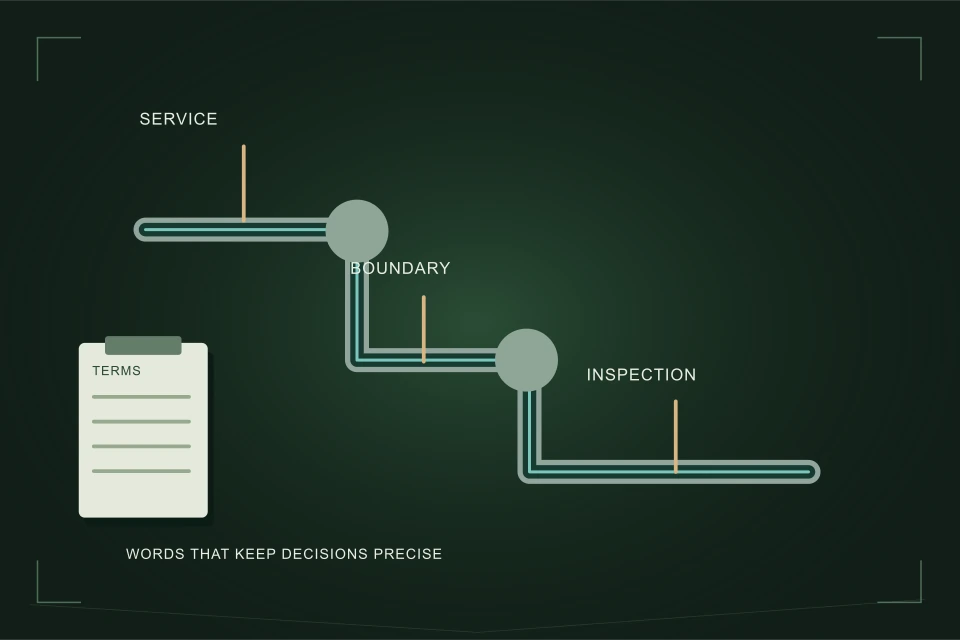
Connection planning vocabulary separates the pipe itself from the records, approvals and responsibilities around it. Use these definitions to make an enquiry precise: what exists, what is changing, which section an assessment covers and who resolves the next question. A label such as “complete” should identify its scope and evidence rather than standing in for every project requirement.
- Public and private service records have different coverage.
- Investigation and approval are different kinds of evidence.
- Proposed, approved and installed drawings need distinct status labels.
- A scope exclusion needs an assigned handoff rather than an assumption.
01 /How should these terms be used in a project file?
Use the same terminology in the request, proposal and closeout record. A “connection” can mean the entire route or one interface, so identify its limits. A “locate” can mean a request, an owner response or a private field investigation, so state which one exists. The distinctions help a recipient see what is known and avoid treating a preliminary statement as a completed assessment.
Keep technical design questions with the qualified project team. These definitions explain language; they do not prescribe a pipe diameter, connection grade, construction method or legal arrangement. Where a term names an official Calgary programme, use the current City source to confirm its applicability. Where it names a record, identify the author, date and section covered.
The practical result is a brief that another person can act on. “Private route not located” requests a specific investigation. “Permit evidence submitted, outcome pending” states an administrative stage. “New private section, retained public interface” describes work limits. Accurate wording is more useful than a single broad checkmark labelled finished.
A–ZTerms
- Allowance
- A proposal amount based on a stated assumption or later confirmation. Ask what changes it, who approves additional work and which missing condition remains unresolved before treating it as a fixed installation price.
- Applicant
- The person or organization making the relevant application. Identify this role separately from the owner, invoice contact and contractor so approval and inspection communications reach the person responsible for the actual submission.
- As-installed record
- Information describing work actually completed, such as a supplied drawing, photographs or contractor report. Identify its author and limits; it should not silently be represented as a professional survey or an approval document.
- Backfill hold point
- The project stage at which required review or evidence must be resolved before work is covered. Establish the applicable arrangement with the qualified team rather than assuming an owner’s photograph authorizes backfill.
- Branch
- A drainage path joining another drain or service. A visible branch in footage can raise a connection question, but its appearance alone does not establish which property has rights to use or alter it.
- Brief
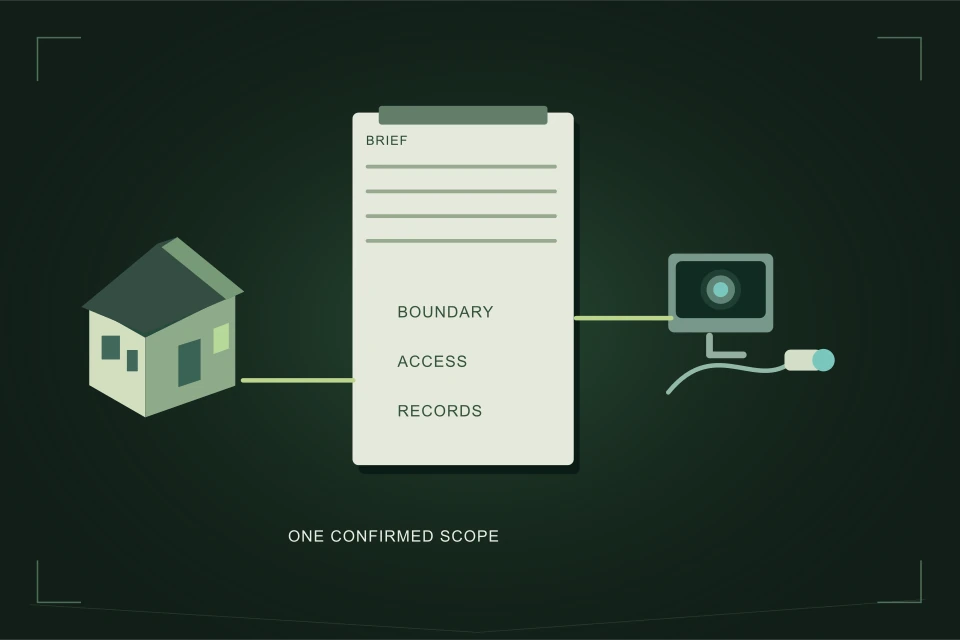
- A structured description of the property change, available evidence, work boundaries and unresolved questions. It requests useful professional input; it does not design plumbing, issue an approval or book construction by itself.
- Building drain
- The drainage pipe within or under the building that carries collected wastewater toward the outside service. Keep its assessment distinct from outside lateral footage so concealed indoor branches are not assumed to have been inspected.
- City service record
- Calgary public sanitary information concerning the City-maintained main-to-property-line segment. The dataset says private material and installation date may differ and excludes large commercial and multi-family service lines from its coverage.
- Cleanout
- An access opening used to reach drainage for service or inspection. Identify the actual access point in a camera report, because footage direction and reached section depend on where the inspection entered the system.
- Closeout
- The completed project record package, with applicable review evidence, work limits and supplied installation information. Compare it with the purchased scope; a restored yard or paid invoice does not identify every promised document.
- Condition evidence
- Observed information about the assessed section, such as visible findings in a camera run. It contributes to a decision but does not by itself establish capacity, external support or suitability for a proposed building.
- Connection interface
- The point where one defined section joins another, such as new private work meeting retained pipe. Identify the interface and responsibility explicitly so one contractor’s work limit does not become another contractor’s unassigned task.
- Contractor scope
- The written description of included work, assumptions, exclusions and deliverables. Compare this before comparing totals, particularly when proposals differ on retained services, further investigation, approval coordination, public work or final restoration.
- Disconnection
- An operation that must name the utility and actual work limits. Temporary water shutoff, permanent water disconnection and sanitary work are different records; one completion statement should not silently describe all of them.
- Drawing revision
- The identifier distinguishing one plan version from another. Include it in enquiries and proposals, then obtain clarification when a revised building footprint, parcel arrangement or service route changes the priced assumptions.
- Evidence index
- A short list of available records with source, date, scope and limitations. It helps recipients navigate original footage, drawings, reports and correspondence instead of treating an undated collection of attachments as uniformly current.
- Exclusion
- Work or information a proposal does not provide. An exclusion can be workable when the responsible party and handoff are assigned; it should not become an assumption that the omitted item is unnecessary.
- Field investigation
- Work undertaken at the property to establish specified information. Ask which question it resolves, how findings are recorded and what remains outside its reach before assuming one investigation settles the entire connection project.
- Footage reach
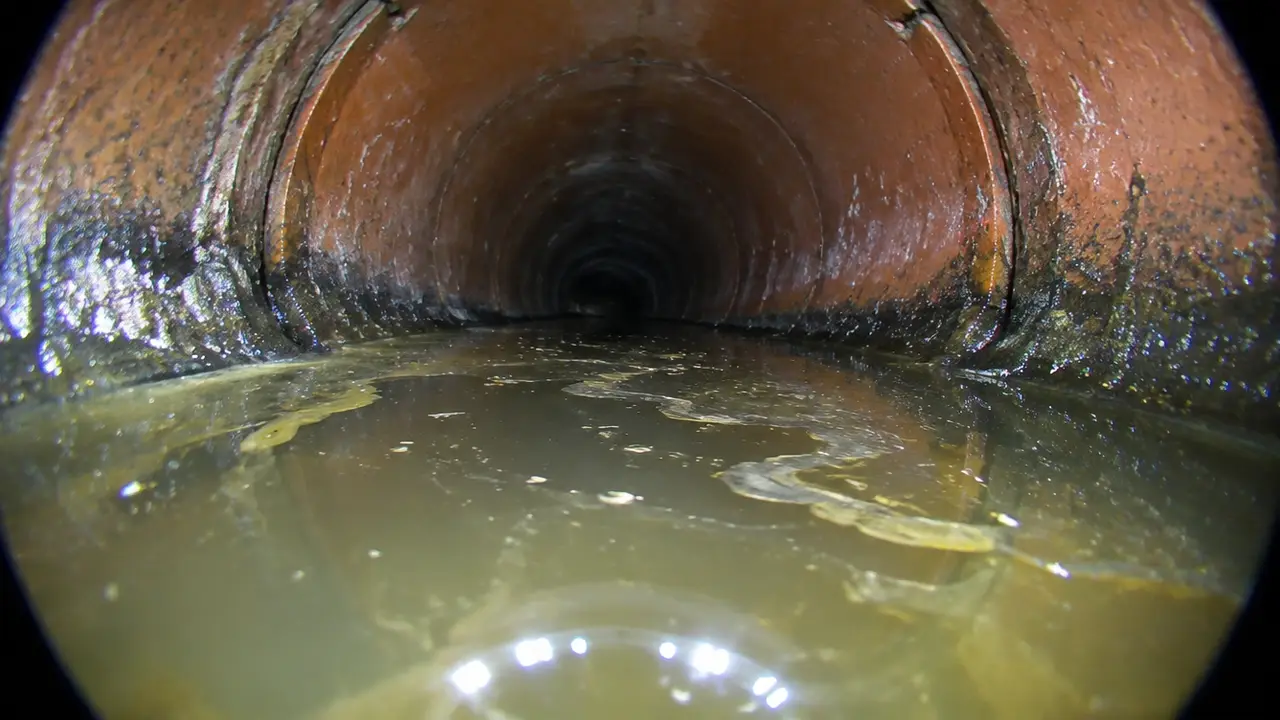
- The part of the pipe an inspection actually reached, identified by access point, direction and endpoint. An early stop or obscured section should remain a limitation rather than being described as a complete assessment.
- Grade slip
- City-issued servicing information used with the project plans. Calgary’s infill page references it for installation and subdivided-lot services. Retain the current document; this glossary does not convert it into a homeowner design worksheet.
- Infill
- A development project on an existing urban site. For the connection brief, describe the actual proposed building and lot arrangement rather than assuming every infill project is a detached replacement house with the same service process.
- Inspection arrangement
- The applicable review process, responsibilities and readiness requirements for the actual project. It may involve a site inspection or a qualifying programme, but should be established with the relevant City and project contacts.
- Investigation stage
- A defined preliminary scope to resolve missing evidence before installation is priced or selected. Record the deliverables and limits so the owner understands what decision the investigation supports and what it cannot establish.
- Lateral
- The sanitary service connection associated with a building. Identify private and public segments when using the term; an invoice or video described simply as a lateral assessment can otherwise leave its coverage ambiguous.
- Locate request
- The information submitted to begin facility-owner notification. A ticket number documents the request; it does not establish completed responses, private locating, valid on-site marks or permission to proceed with excavation.
- Locate response
- Information or clearance supplied through the facility-owner process. Retain it with the requested area and applicable instructions. It should not be treated as proof that privately owned systems outside that scope were investigated.
- Private locate
- An arrangement to investigate customer-owned underground facilities. USP guidance distinguishes these from its participating-utility notification process. Identify the investigated area, facilities, method and limitations rather than assuming the scope includes every possible buried line.
- Private service
- The owner-side sanitary segment from property line to house in Calgary’s dataset description. Its material, date and condition require appropriate private evidence; the public record cannot be copied across the boundary to resolve them.
- Project boundary
- The limit of the work or decision being described. Boundaries can separate building work, private service and public infrastructure, or divide contractor packages. State them explicitly whenever responsibility or price depends on the distinction.
- Public interface
- The relationship between the proposed service work and City infrastructure. Ask who confirms the applicable arrangement, approvals and work limits rather than assuming a private installation quote includes every public-side activity.
- Quick Trench
- Calgary’s qualified-contractor arrangement for qualifying new single and semi-detached residential homes, with specified evidence and review conditions. It is not a universal substitute for inspections on every renovation, multi-unit or commercial project.
- Retained section
- Existing pipe that the project does not replace. Record the assessed limits, evidence and relevant conditions so a future reader does not mistake the new building’s completion date for the age of the entire connection.
- Scope change
- A revision to the agreed work prompted by design updates or discovered conditions. Record evidence, proposed response, authorization and consequences for approvals, price and restoration instead of leaving a significant change as an undocumented conversation.
- Secondary suite
- A project category with its own Calgary building and trade questions. New, extended or altered plumbing needs the applicable permit. The category alone does not tell this site whether an outside lateral is adequate.
- Sonde
- A transmitter used with suitable inspection equipment to help investigate pipe position from the surface. Keep receiver estimates distinct from surveyed project levels and identify any section the equipment did not reach.
- Subdivision
- A change to parcel arrangement that raises lot-specific service questions. Calgary’s infill guidance says each subdivided inner-city lot requires separate services as indicated by its grade slip; reconcile the current plans and existing routes.
- Unknown
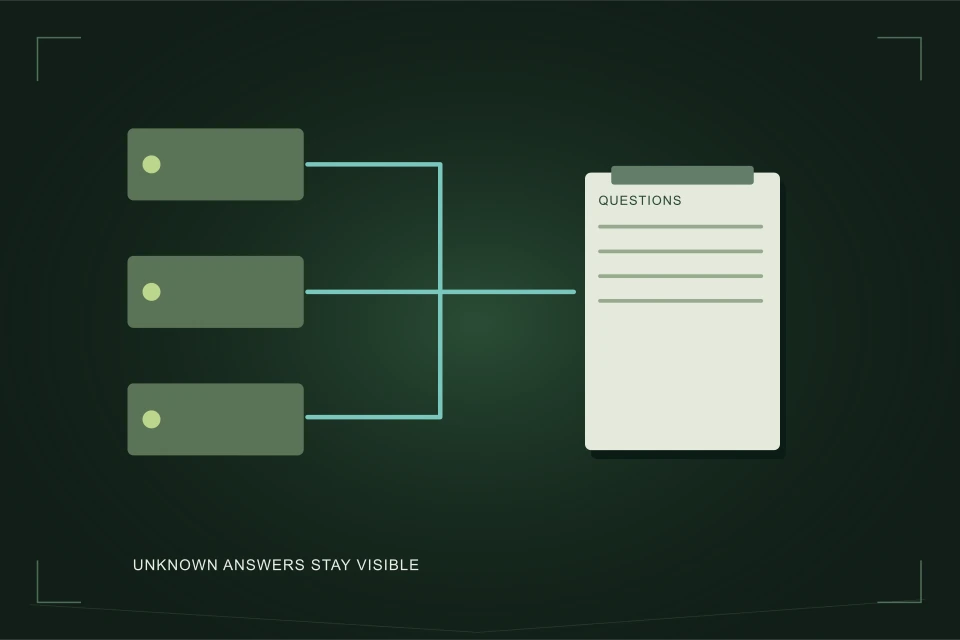
- A valid evidence status indicating that an answer has not been established. In a useful connection brief it becomes a question for investigation, rather than an automatic favourable assumption or an implied failure finding.
FAQQuestions people ask
Is a brief the same as a design?
No. It organizes supplied information and questions. Technical design and approval require the actual project assessment.
Why distinguish record dates?
A current public lookup, old invoice and recent private inspection can all be useful, but they describe different sources and moments. Keep their dates and scope visible.
What does unknown mean in the tool?
It marks a supplied information gap. The tool does not silently replace it with a presumed material, condition, capacity or approval.
Does closeout mean the whole route is new?
No. The records must identify installed, retained, altered and disconnected sections so the work limits are clear.