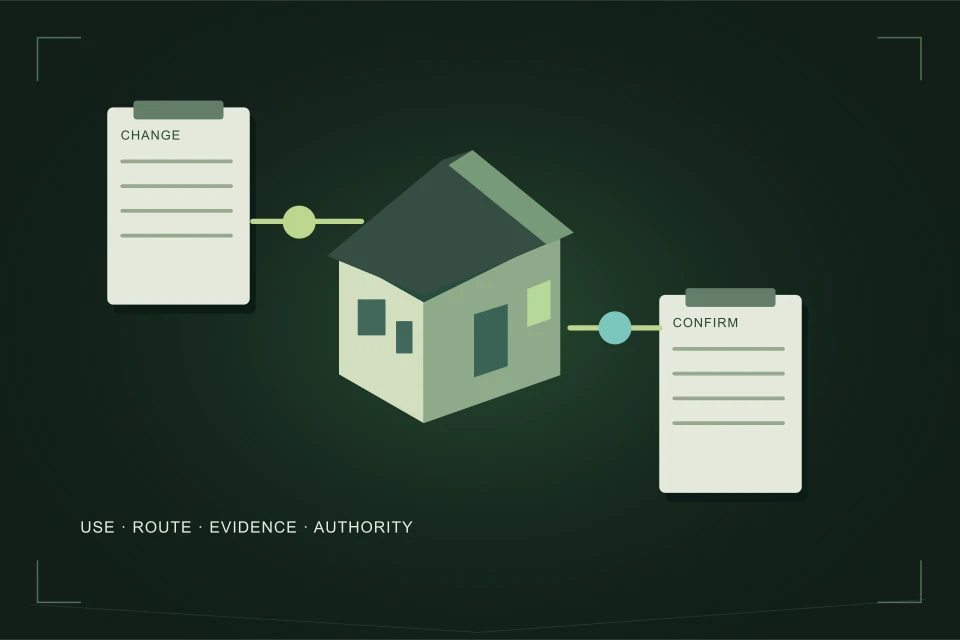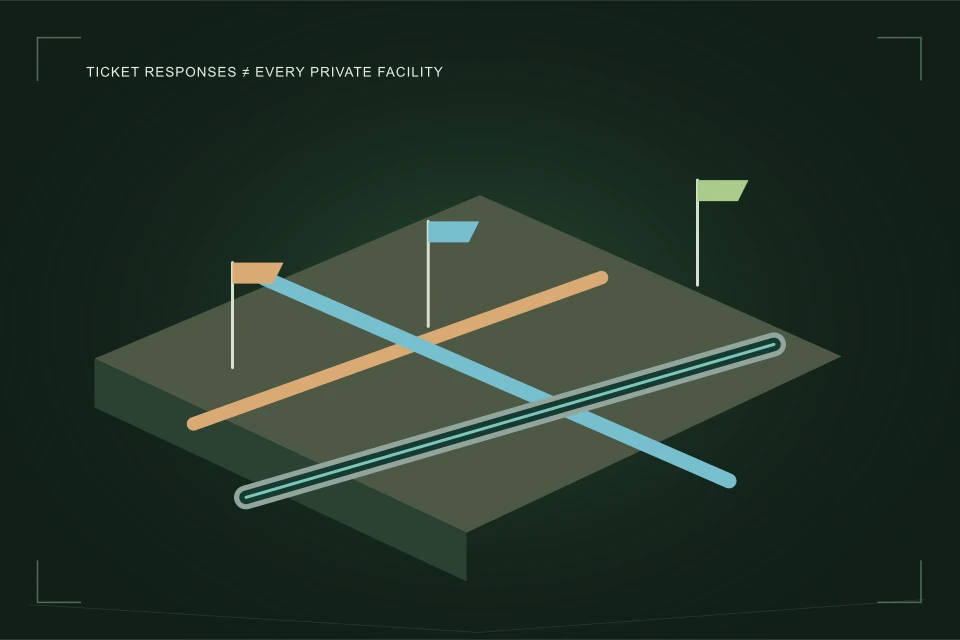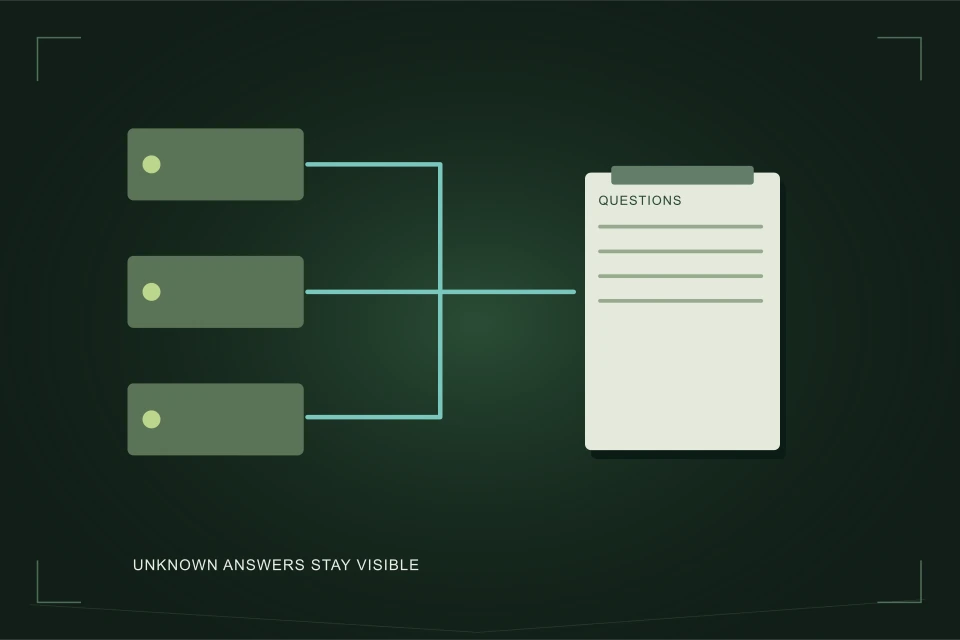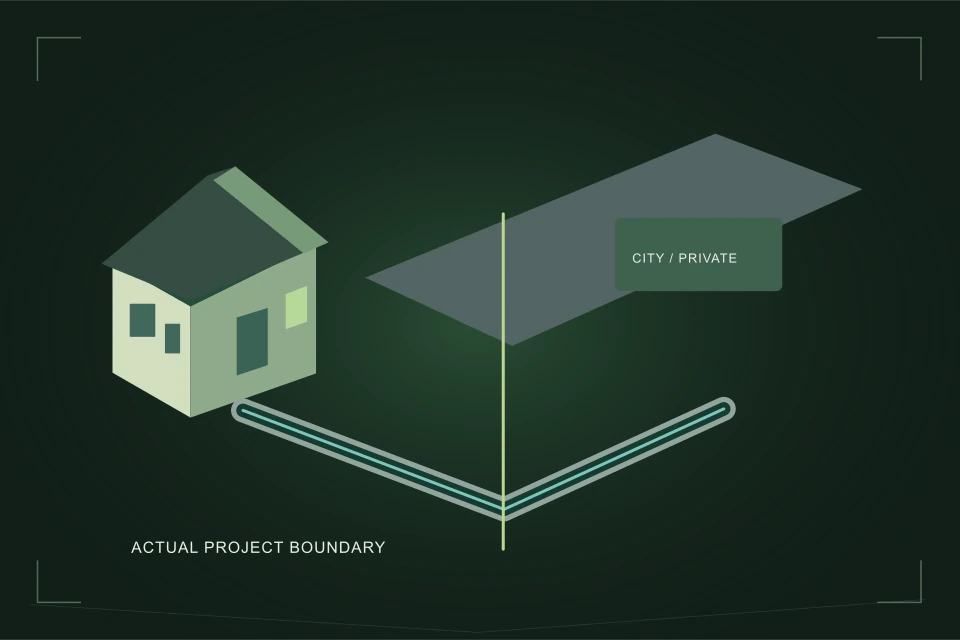
Use Calgary’s public service records for the City segment, current project documents for the proposed building, and private investigation for the owner-side connection. Direct permit, infill, subdivision and disconnection questions to the applicable City source or project contact. Keep local records, field evidence and approvals separate so none is overstated as a complete connection assessment.
- Calgary public sanitary data excludes large commercial and multi-family services.
- The private pipe can differ from the public segment in material and date.
- Infill and retained-building renovations have different applicability questions.
- 311 is the City enquiry route for sewage backups and specified service issues.
01 /Which Calgary source answers which question?
| Question | Starting source | Prepare first |
|---|---|---|
| Public-service information | Public Sanitary Service Lines dataset | Actual address and retrieval date |
| Private connection responsibility | Installing water and sewer connections | Work boundaries and building project |
| New-house infill servicing | Plumbing and gas for infill construction | Building form and current plans |
| Renovation or suite plumbing | Trade permits and suite guidance | Proposed changes and applicant |
| Demolition water handoff | Water Interruptions and Disconnections | Temporary versus permanent operation |
| Current sewage backup | Sewage backups and 311 | Present symptoms and safe access information |
These sources have different purposes. A dataset describes records; a building webpage describes an application or construction context; an incident page explains the initial response. Use the right one for the question instead of treating the City website as a single universal connection approval. Save the relevant correspondence when the actual project needs clarification.
The source desk intentionally avoids a neighbourhood risk ranking or assumed private material based on community age. Older and newer communities can both contain changed private connections. Date and geography can suggest useful questions, but a contractor still needs the project records and field evidence for the particular lot.
02 /How should a public record be used on a Calgary lot?
The dataset metadata identifies the City-maintained main-to-property-line segment and says the private segment can be a different material and installation date. It also says large commercial and multi-family service lines are not included. A public record is therefore useful context for a private connection enquiry, while an absent large-building record is not a diagnosis that a service is missing.
Identify the exact queried address and any ambiguity caused by redevelopment, address changes or proposed subdivision. Do not use a neighbouring record to complete a missing result. Keep the public source date separate from the date of your private inspection. The City invites questions about errors or omissions through 311, so retain the actual result when raising a discrepancy.
For a wider community atlas, CalgarySewers.ca has a separate data role. This connection desk does not duplicate its mapped percentages. Its practical purpose is placing the relevant public record beside the private footage, locate evidence and current building plan so a project professional can understand the specific information available.
03 /What is different between new infill and retained-house work?
New infill involves the proposed building and applicable servicing information, including questions about retaining, replacing or adding connections. Retained-house work begins with the drainage being altered and evidence about the existing system. A renovation should not automatically inherit the process used for a new home merely because excavation happens on the same street.
Calgary’s infill guidance identifies a Quick Trench arrangement for qualifying new single and semi-detached homes with qualified contractors. Other project types require their separate applicable permit or site-servicing questions. The same guidance says subdivided inner-city lots require separate services as indicated by the City grade slip. Keep those project-specific documents with the brief rather than deciding applicability from a general illustration.
For suites and renovations, identify the proposed fixtures and layout and obtain the proper plumbing and other project approvals. A public line record does not calculate capacity for the altered use. The connection tool gives questions to discuss with the team; it does not approve a retained pipe or specify its design.

04 /How should climate and site conditions enter the brief?
Describe conditions you know: planned season, occupied building, current surfaces, access constraints and the proposed construction sequence. Ask the contractor how those affect investigation, safe work, installation and restoration. A cleared driveway, a retained foundation or a later landscaping phase can matter to scope without the website claiming one universal Calgary soil profile or private-pipe depth.
Treat route and depth as evidence questions. Public-side geometry, a sonde estimate and a measured level are different inputs. The contractor and designer should identify what project-specific information is needed. Do not use a regional frost statement or a general depth from an article to complete missing elevations on an individual building connection.
For scheduling, identify approvals, complete locate responses, private locating, reviewer availability and contractor booking as dependencies. USP currently warns of high-volume response delays. A reasonable planning brief makes those dependencies visible without converting a minimum notice interval into a confirmed start or promising that winter restoration will finish on a fixed date.
05 /When should 311 be part of the enquiry?
Calgary directs sewage-backup reports to 311 so the initial assessment can distinguish possible City infrastructure involvement from internal plumbing. Its water-service page directs demolition or permanent cutoff and commercial or multi-family service enquiries to 311. Describe the actual issue accurately and retain the resulting report or correspondence where it affects the project.
Do not turn an enquiry into an expectation that City crews provide every private service. The backup page describes limits on activities inside the home and referral to a plumber where a private issue is identified. Project-specific approvals and contractor investigations remain separate from an incident visit. If you receive a Customer Service Report or other record, keep its actual findings rather than summarizing it as “City approved everything”.
Prepare your next step with the Connection Planning Brief. Choose unknown where the City or professional answer is still needed. Pair the result with the contractor request guide so a local enquiry carries a precise purpose, current documents and clear limits instead of an unsupported diagnosis.
FAQQuestions people ask
Is the public dataset a complete Calgary sewer inventory?
Its stated scope excludes large commercial and multi-family service lines and covers the public service segment. It is not a complete private-building drainage map.
Can community age establish my private pipe material?
No. It can inform questions, while the actual private segment may have changed. Use property-specific evidence.
Where do I report a current sewage backup?
Follow the City’s sewage-backup guidance and call 311. Do not wait for a development planning request.
Does this site set Calgary permit fees or timeframes?
No. Use current official sources for the applicable service and have the project team confirm the arrangement.