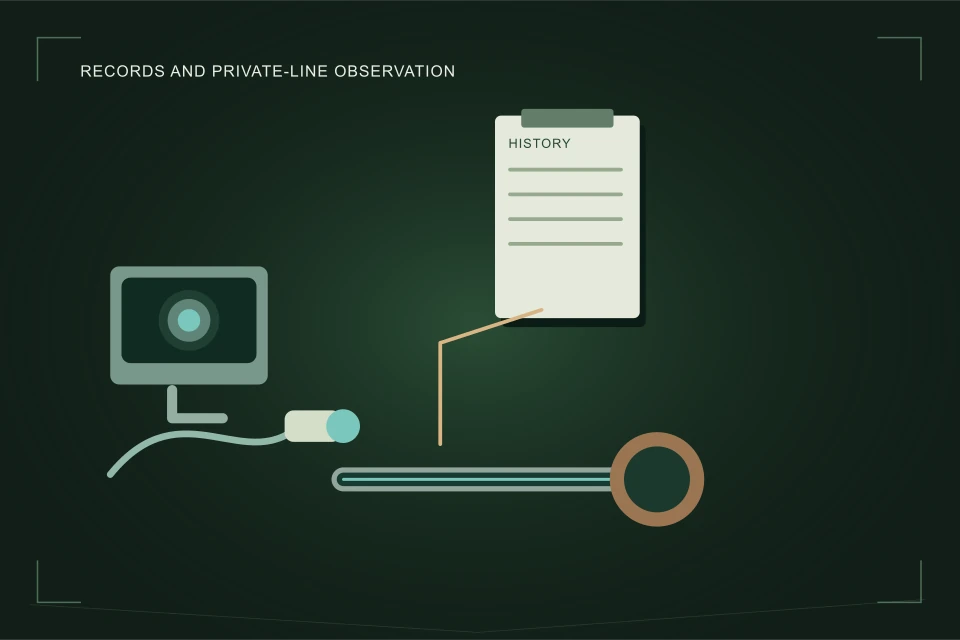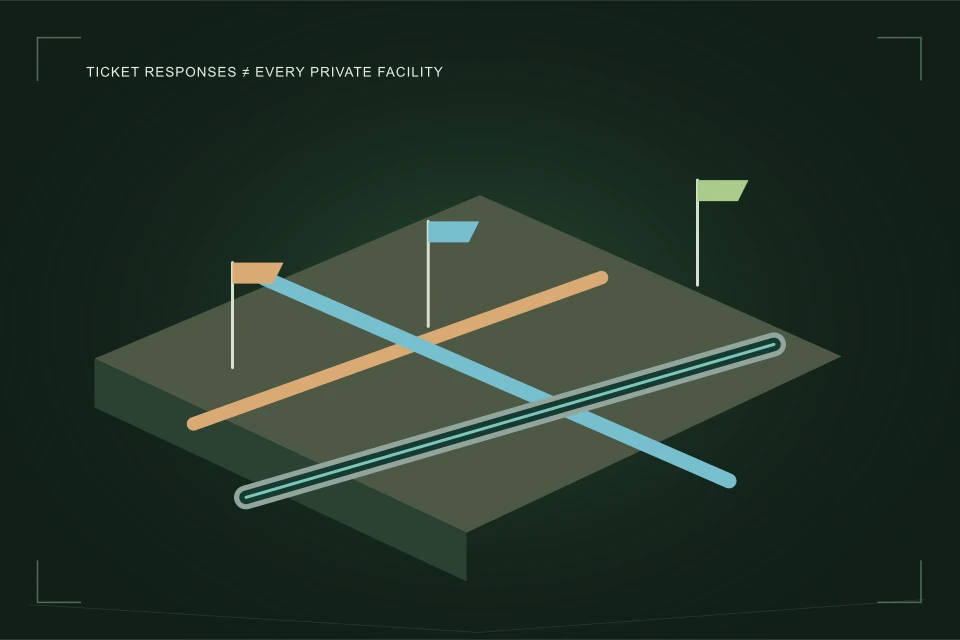
A Calgary public sewer record describes the City segment; a USP ticket requests information from participating facility owners; a private locate investigates customer-owned facilities. Keep these separate in your connection brief. A map or submitted ticket is not permission to dig, and privately owned sewer lines need their own locating arrangement before excavation is planned.
- City public-service geometry is not a surveyed private pipe route.
- USP does not locate customer-owned sewer lines through its member notifications.
- A locate request is different from completed responses and on-site evidence.
- Route and depth information need an identified investigation method.
01 /What can Calgary’s public sewer dataset tell you?
It can provide information about the public sanitary service segment, including its recorded material, installation date, diameter and public-side length. The City’s dataset description states that it covers the main-to-property-line portion and excludes large commercial and multi-family services. That is useful context for a connection enquiry, but it is not a complete underground inventory of a redevelopment lot.
The private section can have a different material and installation date. A public map also cannot resolve the condition of a retained building drain or identify every private branch. Save the actual address result and the retrieval date. If it differs from a contractor’s field investigation, retain both and ask the relevant party to resolve the discrepancy rather than redrawing the map to match expectations.
For an infill brief, use the record as a labelled source attachment. Write “City public-service record retrieved on this date” instead of “sewer location verified”. Those descriptions have different meanings. The first accurately identifies the evidence; the second implies a degree of field confirmation the dataset alone does not supply.
02 /What does a USP locate request cover?
Utility Safety Partners provides a notification process for participating underground-facility owners. Its homeowner guidance distinguishes utility-owned facilities from privately owned systems and says private lines require a separate locating arrangement. That includes customer-owned water and sewer services. The fact that the request names the correct civic address does not cause every line on that lot to be located automatically.
Ask the contractor to identify the dig area accurately and retain the request information, facility-owner responses and relevant locate documents. A ticket number proves a request exists; it does not prove that every response is complete or that the scope includes all private facilities. Keep those evidence states separate so a blank checklist cannot be interpreted as clearance.
USP currently warns that high volumes can mean response times of five to ten business days. Plan the actual start around completed information and the contractor’s requirements, not an assumed date calculated from the day a form was submitted. The source’s current guidance and each facility owner’s documentation govern the practical handoff, while this site does not schedule or request locates.
03 /How should the private-locate scope be described?
Describe the proposed excavation area and all privately owned facilities that may be relevant, rather than requesting only “find the sewer”. A redevelopment lot can contain facilities serving an accessory building or earlier additions. Give the locator known drawings and repair records, and identify any inaccessible portions. Ask what methods will be used, what they can locate and how limitations will be reported.
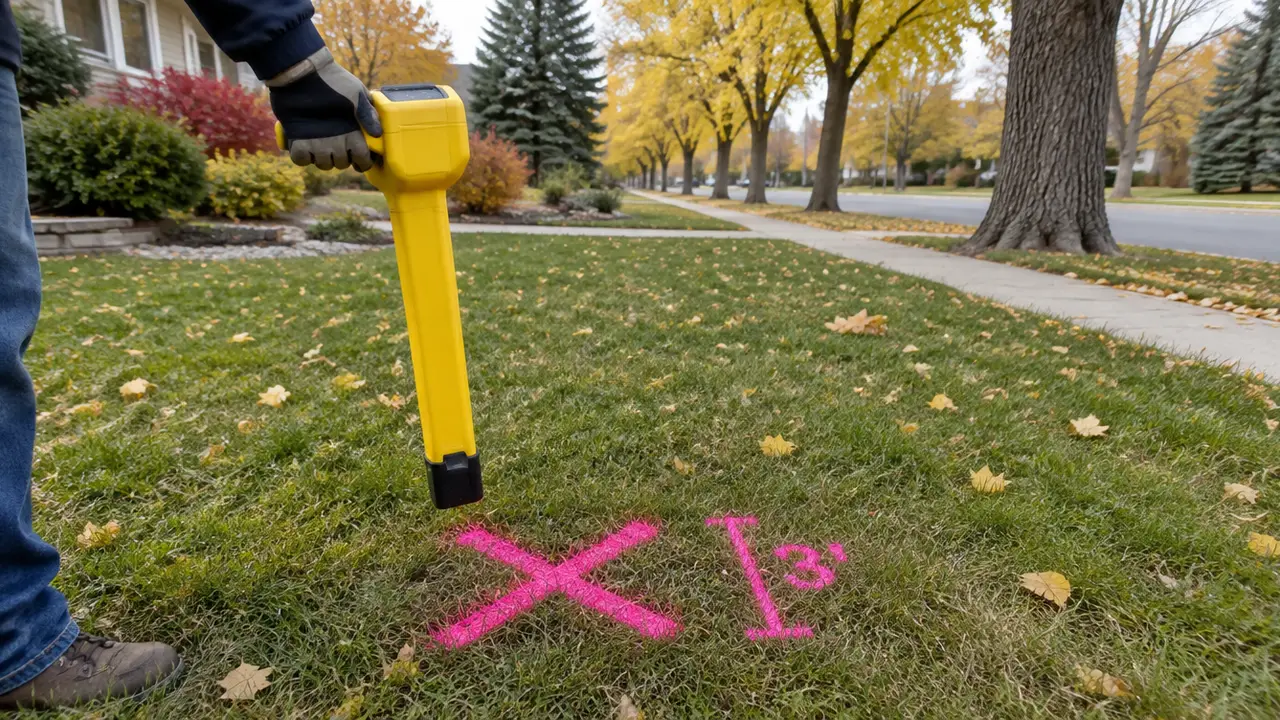
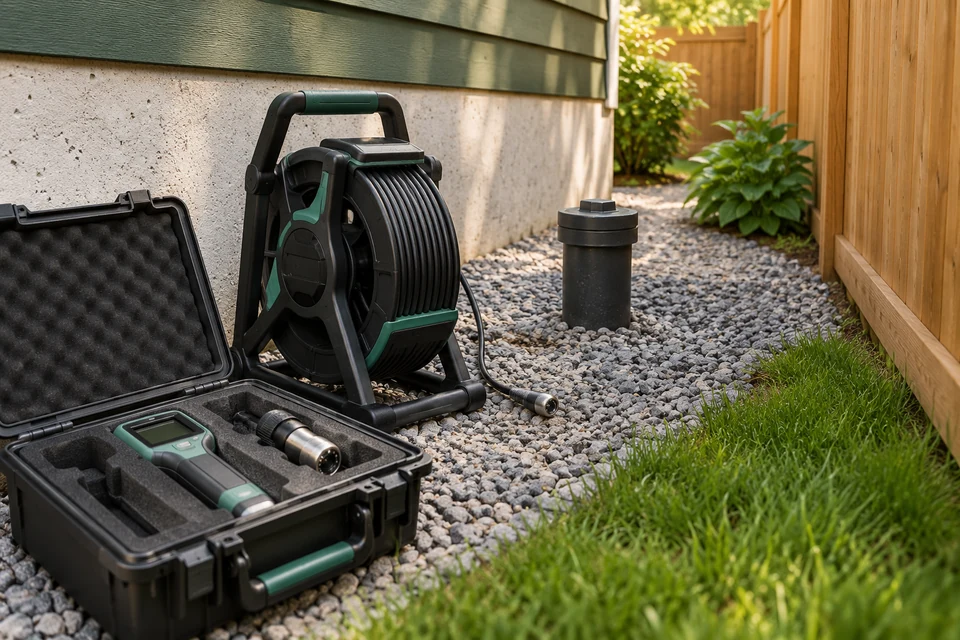
For the sewer, a camera and sonde can help relate the internal inspection to marked positions at the surface. The receiver’s estimated depth is not a surveyed design level. Keep the method, marked positions, dates and visibility or access limitations with the footage. If an obstruction prevents the sonde reaching part of the intended route, the remaining route should stay unconfirmed.
Do not assume the private-locate scope extends onto adjoining land or establishes access rights. Where the investigated route crosses a boundary or connects to another building, flag that as a separate project question. The locator’s evidence describes what was investigated; ownership and authority to alter a connection may require other records and professional advice.
04 /Why do marks, photographs and documents all matter?
Ground marks can change or disappear during excavation, site preparation and weather. Photographs help preserve where the marks were, but a photograph without context can be difficult to interpret. Include a view that relates the marked area to fixed site features, identify when it was taken and retain the associated locate documents. An image and the written evidence work together.
Give the excavating contractor the actual documentation rather than a compressed screenshot of one line on a plan. The documents can contain facility-specific instructions and validity conditions. If the project area changes, responses expire or marks become unclear, the contractor needs to resolve that before proceeding. An owner’s planning checklist cannot replace that responsibility.
| Item | Records | Does not prove |
|---|---|---|
| Ticket | Requested area and notifications | Every response completed |
| Utility response | Owner’s information or clearance | Private services located |
| Private locate | Scope, method and reported positions | Permit approval or property rights |
| Site photograph | Visible marks at a date | Unmarked underground conditions |
05 /What excavation safety questions belong in the owner’s brief?
Ask who is responsible for reviewing the locate information, protecting exposed facilities and addressing changes or missing information. Ask how the contractor will manage safe access and excavation protection. These are meaningful procurement questions; they are not instructions for an owner to enter a trench or direct machinery around a live utility. Alberta provides excavation and buried-facility safety resources for employers and contractors.
Keep occupants and visitors out of the working excavation area and arrange access through the person supervising the work. An open trench is not a safe place to inspect a joint yourself or retrieve a lost drawing. If you need photographs or measurements for the project record, agree before work begins who will obtain them safely as part of the work.
If a gas smell, damaged utility or other dangerous condition is reported, stop ordinary project-planning activity and use the relevant emergency response from a safe location. Do not make a repair, isolation or re-entry decision through the brief tool. The tool is for preparing and retaining questions, not handling an active hazard.
06 /How does the information reach the construction team?
Create an index listing each locate item, date, scope and unresolved limitation. Attach the underlying files. Identify the current dig area and plan revision so the crew can compare them with the area actually investigated. A change to the building footprint or service alignment can make a previously suitable enquiry incomplete even if the civic address remains the same.
When asking for a quote, distinguish completed evidence from investigation still to be provided. A bidder can then state whether locating is included, what private systems the allowance covers and what circumstances require additional work. A single “locates included” sentence should be expanded where it leaves the public/private distinction or the scope of the private investigation unclear.
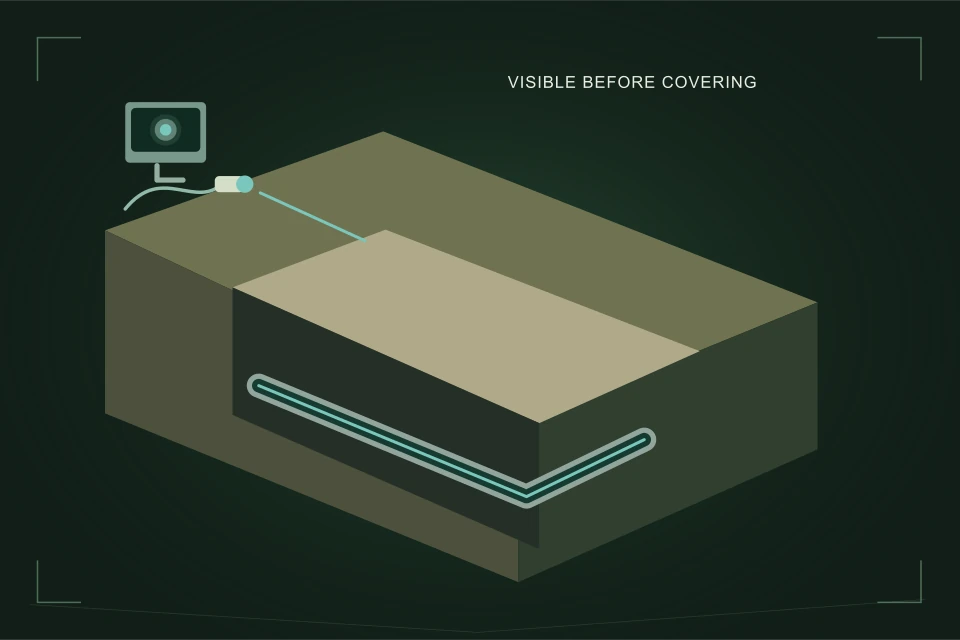
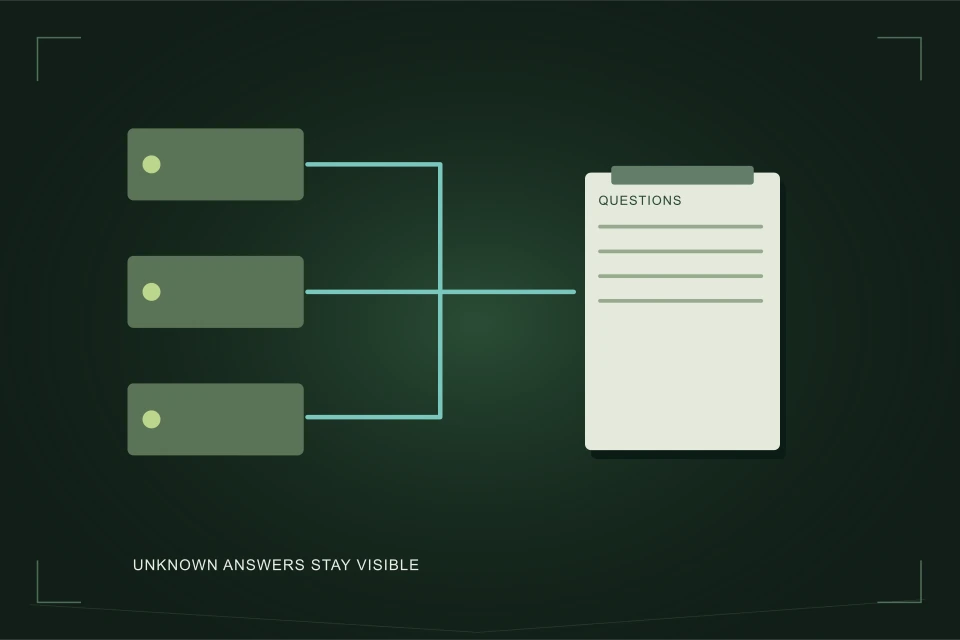
Use the connection brief to record whether private locating is complete, missing or unknown. Continue with existing lateral evidence for condition questions, and with pre-backfill records for the information that must be retained when the actual installation is still visible.
07 /What if locating and design cover different areas?
Consider an illustrative private locate obtained for a proposed service route along one side of a house. A revised plan later moves the route to the other side. The original record remains useful for the area it investigated, but its civic address does not make it complete for the new work area. Give the changed plan to the contractor and locator and ask which additional information is required.
Keep the older scope, revised work area and new evidence clearly identified. Do not extend marks across an uninvestigated area or use a screenshot of the earlier result as universal clearance. The contractor needs the applicable facility information for the actual excavation. This example illustrates a documentation limit; it does not instruct an owner to determine safe digging distances or waive a facility owner’s requirements.
FAQQuestions people ask
Does a USP ticket locate the sewer in my yard?
USP says customer-owned facilities require separate locating arrangements. A ticket and utility-owner responses do not establish the route of every private pipe.
Can I excavate from the City sewer map?
Do not treat the public dataset as a complete private utility locate or excavation clearance. The contractor must establish the relevant facility information for the actual work area.
What if the camera stops before the property line?
Record the reached section and why it stopped. Keep the remaining route and condition unresolved until appropriate further investigation establishes them.
Is the locate date a construction booking?
No. Actual work depends on complete and applicable responses, private facilities, validity conditions, permits, contractor scheduling and site conditions.
NETWORKGo deeper across the HAUSE Sewer network
Sewer line locating and depth: how the mark on your lawn is made
How sewer line locating and depth readings work: the sonde, the hand-held locator, peak and null readings, marking, accuracy, and calling before you dig.
SewerRoots.caPlanting Distance Checker
Planting Distance Checker: pick a tree, shrub or perennial group, enter its distance from the sewer lateral, and see if the spot meets the guideline.
SewerCleaners.caHow to hire a sewer cleaner: the checklist, the questions and the paperwork
How to hire a sewer cleaner in Canada: questions to ask, insurance and WCB coverage in Alberta, a written scope template, red flags, and how to compare quotes.